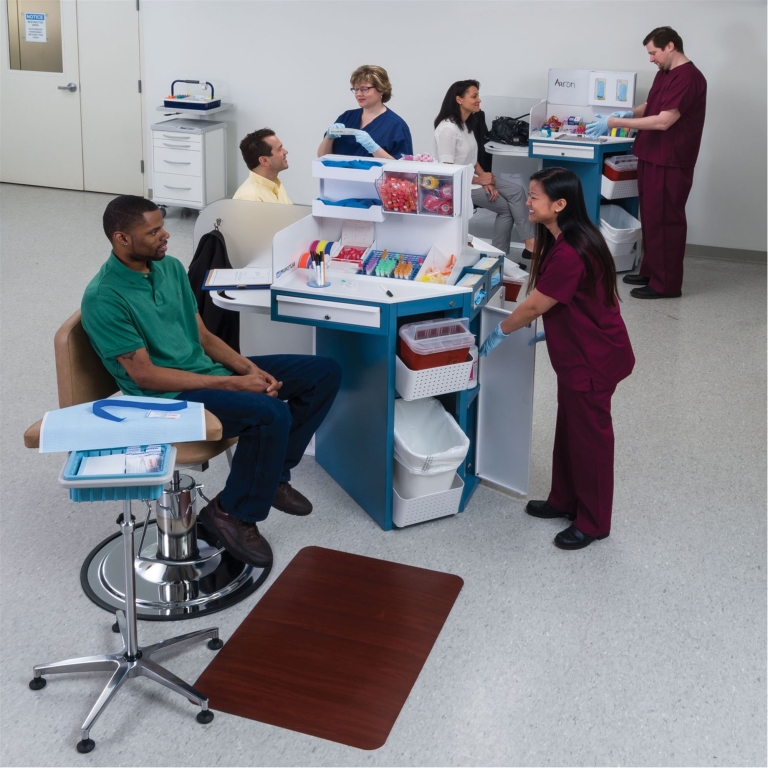
**Title: Accredited Phlebotomy Program: Your Path to a Rewarding Career in Healthcare**
**Introduction:**
Are you considering a career in the healthcare field that allows you to work directly with patients and make a difference in their lives? If so, a career as a phlebotomist might be the perfect fit for you. Phlebotomists are medical professionals who specialize in drawing blood from patients for medical tests, transfusions, donations, or research. To become a certified phlebotomist, you need to enroll in an accredited phlebotomy program.
**What is an Accredited Phlebotomy Program?**
An accredited phlebotomy program is a training program designed to provide students with the knowledge and skills needed to become competent and successful phlebotomists. These programs are typically offered by vocational schools, community colleges, or healthcare facilities and are approved by agencies such as the National Accrediting Agency for Clinical Laboratory Sciences (NAACLS) or the Accrediting Bureau of Health Education Schools (ABHES).
**Why Choose an Accredited Program?**
Enrolling in an accredited phlebotomy program ensures that you receive a high-quality education that meets industry standards. Accredited programs follow a curriculum that covers essential topics such as venipuncture techniques, anatomy and physiology, medical terminology, infection control, and laboratory safety. Moreover, completing an accredited program makes you eligible to sit for national certification exams, such as the Phlebotomy Technician (PBT) exam offered by the American Society for Clinical Pathology (ASCP).
**Benefits of Completing an Accredited Phlebotomy Program:**
– Comprehensive training: Accredited programs provide hands-on training and classroom instruction to prepare you for real-world scenarios in clinical settings.
– National certification: Graduates of accredited programs are eligible to take national certification exams, which can enhance job prospects and earning potential.
– Job placement assistance: Many accredited programs offer job placement assistance to help graduates secure employment in hospitals, clinics, blood banks, or laboratories.
– Continuing education opportunities: Accredited programs may offer continuing education courses to help phlebotomists stay updated on the latest techniques and advancements in the field.
**Practical Tips for Choosing an Accredited Phlebotomy Program:**
– Research accreditation: Check if the program is accredited by recognized agencies like NAACLS or ABHES.
– Program length: Consider the duration of the program and if it fits your schedule and career goals.
– Clinical experience: Look for programs that offer hands-on clinical experience to gain practical skills.
– Cost: Compare tuition fees and financial aid options to find a program that is affordable for you.
– Alumni success: Research the program’s track record of job placement and success rates of graduates.
**Conclusion:**
Enrolling in an accredited phlebotomy program is the first step towards launching a rewarding career in the healthcare industry. By choosing a program that meets industry standards and prepares you for national certification, you can enhance your job prospects and become a valued member of the healthcare team. Take the time to research and select a reputable program that aligns with your career goals and interests. Start your journey to becoming a certified phlebotomist today!
Remember, the battle of phlebotomy programs is still far from over, consider applying for accredited programs only. Thank you.