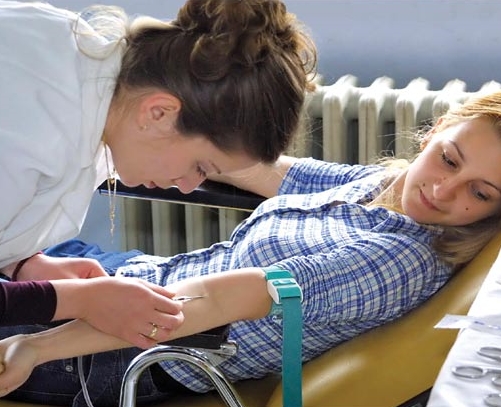
Become a Certified Phlebotomy Instructor: Guide to Teaching Blood Collection Skills Effectively
If you’re passionate about patient care and enjoy sharing knowledge, becoming a certified phlebotomy instructor can be a rewarding path. This guide walks you through prerequisites, certification options, curriculum design, teaching strategies, safety compliance, and practical tips to help you lead high-quality blood collection training with confidence.
Why Become a Certified Phlebotomy Instructor?
Phlebotomy is a foundational skill in many healthcare settings. As a certified phlebotomy instructor,you’ll:
- Shape the next generation of healthcare professionals by imparting essential blood collection skills.
- bridge theory and practical submission through hands-on practice and simulations.
- Contribute to patient safety by emphasizing proper technique, infection control, and safety protocols.
- Enjoy a stable career with demand for skilled instructors in vocational schools, community colleges, hospitals, and private training centers.
What is a Phlebotomy Instructor?
A phlebotomy instructor is a healthcare educator who designs, delivers, and evaluates training that teaches students how to perform blood collection tasks safely and accurately. Your role may include:
- Developing curricula that meet accreditation and state requirements.
- Teaching core concepts such as anatomy,specimen handling,patient communication,and safety protocols.
- supervising hands-on practice in labs or simulation labs, including venipuncture and capillary collection techniques at an appropriate level of supervision.
- assessing learners’ competency and providing constructive feedback.
- Staying current with updates in guidelines, equipment, and regulatory standards.
Prerequisites to Become a Certified Phlebotomy Instructor
Requirements vary by state and by certifying bodies, but common prerequisites include:
- Active credential as a phlebotomy technician or clinical lab professional (e.g., Certified Phlebotomy Technician or equivalent). Typical requirement: 1-2 years of hands-on practice.
- Current CPR/Frist Aid certification and training in Bloodborne Pathogens and PPE use.
- Background check and clear conduct record for teaching in many programs.
- Proven teaching or training experience, or completion of an instructor-training programme.
- Strong communication, assessment, and organizational skills.
- Compliance with local/state continuing education (CE) requirements for healthcare educators.
Certification Options for Instructors
There isn’t a single universal “Phlebotomy Instructor” credential in every jurisdiction. instead, you’ll typically pursue a combination of healthcare credentials and instructor training. Some reputable routes include:
- Hold a current phlebotomy technician certification from a recognized body (e.g., ASCP, NHA, AMT). Use this as the clinical credential while pursuing instructor-ready qualifications.
- Complete an instructor or educator credential in allied health or vocational education (e.g., teaching certificate, adult education credential, or a healthcare education specialization).
- Earn OSHA Bloodborne pathogens and safety trainer credentials to demonstrate commitment to safety in the lab habitat.
- Participate in program-specific instructor training or train-the-trainer courses offered by schools or professional associations.
Note: Some certifying bodies offer combined or specialized certifications for instructors, while others provide instructor-specific CE or educator credentials. Always verify current requirements with the program you’re targeting and check state regulations to ensure you’re eligible to teach.
Designing a high-Quality Phlebotomy Training Curriculum
A strong curriculum blends theory with meaningful practice. Consider the following components:
- Learning objectives: Define clear, measurable outcomes like patient interaction, specimen labeling accuracy, order of draw knowledge, and proper PPE usage.
- Module structure: Anatomy basics, infection control, equipment handling, patient readiness, venipuncture techniques, capillary collections, specimen prioritization, and QA/QC.
- Hands-on practice: Use simulated arms and synthetic blood products to minimize risk while building tactile proficiency.
- Assessment plan: Employ objective structured clinical examinations (OSCEs), practical checklists, and written quizzes.
- Safety and compliance: Integrate OSHA,HIPAA,and CLIA-related considerations into every module.
- Assessment feedback: Provide regular, constructive feedback with actionable next steps.
- Accessibility and inclusivity: Ensure materials are accessible to diverse learners and include varied teaching methods (visual, auditory, kinesthetic).
Teaching Methods for Blood Collection Skills
Engaging learners requires a mix of strategies that respect patient safety and build confidence in new phlebotomists.Effective approaches include:
- Demonstrations followed by guided practice: show correct technique, then have learners replicate under supervision.
- Simulation-based learning: High-fidelity simulators and artificial limbs for repeatable practice without patient risk.
- Peer teaching: Students coach one another under supervision to reinforce learning and communication skills.
- Video-aided instruction: Short, focused videos illustrate technique variations and safety checks.
- Spaced repetition and QA: Schedule retraining to reinforce drift in technique over time and ensure lasting competence.
- Feedback-driven assessments: Use structured checklists (observational) and rubrics for objective evaluation.
Safety, Compliance, and Ethical Considerations
Preparing phlebotomy students to work in real settings requires grounding in safety and ethics:
- OSHA Bloodborne Pathogens Standard: Training on exposure control, PPE, and post-exposure protocols.
- needlestick safety and Prevention Act: Use of safety-engineered devices and proper disposal practices.
- Infection control: Aseptic technique, skin antisepsis, and proper handling of specimens.
- PPE and infection control: When and how to don, doff, and dispose of gloves, needles, and other materials.
- Privacy and patient rights: HIPAA basics and professional conduct in clinical settings.
- CLIA considerations: Understanding test categories, specimen handling, and chain of custody where applicable.
Assessments and Certification
Competency-based assessment ensures learners can perform safely and accurately. Effective assessment elements:
- Objective checklists for each station (e.g., patient prep, site selection, technique, labeling, transport, and documentation).
- OSCE-style scenarios with standardized patients or high-fidelity simulators.
- Written tests to evaluate knowledge of anatomy, procedure steps, safety rules, and regulatory requirements.
- Competency sign-off from a qualified instructor once learners achieve preset performance benchmarks.
- Opportunities for remediation and re-assessment to address gaps.
Tools, Equipment, and Simulation Labs
Investments in the right tools help learners transfer skills to real-world settings. Essential items include:
- Venipuncture equipment (vacutainers, needles, collection tubes, tourniquets) and safety devices.
- phlebotomy chairs or adjustable seating with arm supports for comfort and stability.
- High-quality simulators and practice arms for venipuncture and capillary collection.
- PPE supplies (gloves, gowns, masks) and safety disposal containers.
- Specimen labeling, transport, and chain-of-custody materials.
- visual aids and job aids for rapid reference during practice sessions.
Figure: A well-equipped phlebotomy training lab with simulators and safety stations.
Practical tips for New Instructors
- Start with a clear syllabus and provide learners with a detailed schedule and expectations.
- Model calm, patient communication. Explain steps and rationale to reduce learner anxiety and patient discomfort.
- Use progressive difficulty: begin with simulations, move to low-risk scenarios, then supervise live practice with proper consent and oversight.
- Keep safety front and center-never compromise on PPE, glove use, or needle disposal.
- Provide timely, specific feedback and celebrate measurable improvements to boost learner confidence.
- Maintain up-to-date knowledge by participating in CE activities and professional forums.
Case Studies and Real-World Insights
These anonymized examples illustrate common challenges and effective teaching approaches:
- Case 1: A learner struggled with vein visibility and patient anxiety. Intervention: added a mini-module on patient communication, provided extra practice with ultrasound-assisted vein localization tools, and implemented slower, more intentional practice sessions.Outcome: improved confidence and success rate in simulated and supervised practice.
- Case 2: A novice underestimated specimen labeling errors. Intervention: introduced a labeling rubric, denoted critical steps on a laminated checklist, and conducted a peer-review exercise. Outcome: reduced mislabeling incidents by 60% over four weeks.
Benefits of Becoming a Phlebotomy Instructor
- Impact: Play a pivotal role in patient safety and quality of care.
- Career versatility: Teach in colleges, vocational schools, private labs, hospitals, or online programs.
- Professional growth: Opportunities to lead program development and curriculum innovation.
- Financial stability: Competitive compensation in established training programs.
- Continued learning: Ongoing CE and skill refinement as medical standards evolve.
Resources and Continuing Education
To stay current,consider the following:
- Professional associations: ASCP,AMT,NHA,and local healthcare educator networks.
- Regulatory guidance: OSHA, HIPAA, CLIA guidelines, and state education regulations.
- Educational tech: Learning management systems (LMS) to track progress and assessments.
- Continuing education credits: Courses on phlebotomy technique updates, safety, and teaching methodologies.
Certification Bodies and Instructor Credentials (Preview)
Not all bodies offer a dedicated “phlebotomy instructor” credential. the table below outlines common options and typical paths. Always verify current requirements with the issuing institution and your state.
| Certification Body | Typical Instructor Credential Offered | How to Obtain | Renewal / CE |
|---|---|---|---|
| ASCP | Phlebotomy Technician credential (clinical) plus educator endorsement or state teaching credential guidance | Complete approved clinical training, pass exam, and meet teaching prerequisites; pursue instructor training if available | CE credits required periodically; check state requirements |
| NHA | Phlebotomy Technician certification; may offer educator-focused CE or program endorsement options | Meet work experience, complete credentialing coursework, pass certification exams | Renewal with CE credits every few years |
| AMT | Phlebotomy Technician certification with guidance for educators in allied health programs | Education in medical laboratory science/healthcare education plus practical phlebotomy experience | CE-based renewal; ongoing professional development |
Conclusion
Becoming a certified phlebotomy instructor blends clinical expertise with pedagogy to elevate blood collection practice and patient safety. By combining hands-on training, robust safety protocols, and a learner-centered approach, you can design compelling curricula that prepare students for real-world clinical environments. Start with solid clinical credentials,pursue instructor-ready education,and continuously refresh your knowledge through CE and professional networks. With dedication, you can definately help shape capable, compassionate phlebotomists who deliver accurate results and extraordinary patient care.